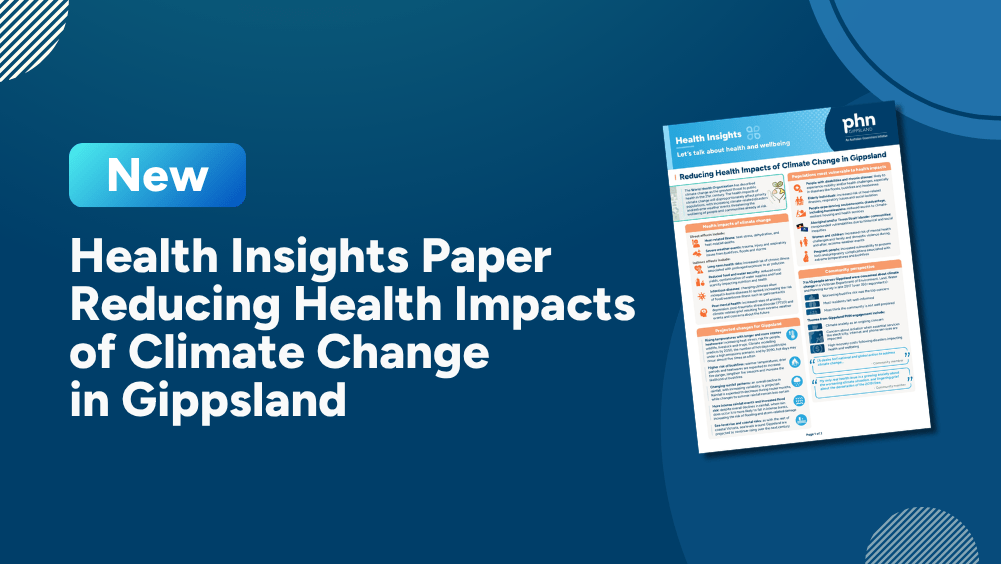
Gippsland PHN has published Health Insights – Reducing Health Impacts of Climate Change, providing new data and practical tools to help local organisations respond to climate-driven health impacts.
Climate change is one of the most significant public health challenges of our time, with Gippsland projected to face more frequent and severe heatwaves, bushfires, flooding and extreme weather events.
Key insights:
- Climate modelling predicts the number of hot days could triple by 2050, and by 2090 ─ could occur almost five times as often. Rising temperatures lead to an increased risk of heat-related illness and deaths, and greater impacts on wildlife, livestock and crops.
- Rising temperatures, drier periods and heatwaves are expected to increase the likelihood of bushfires and lengthen fire seasons, resulting in a greater occurrence of trauma, injury and respiratory issues in the community.
- While an overall decline in rainfall is projected, more intense rainfall events are expected to lead to a higher likelihood of flooding and storm-related damage across Gippsland.
- A changing climate allows infectious conditions like mosquito-borne diseases to spread, introducing a growing risk of food and waterborne illness including gastroenteritis.
- Stakeholder engagement undertaken by Gippsland PHN revealed climate change is an ongoing concern in the region, including isolation when essential services are impacted and high recovery costs following disasters.
Gippsland PHN is strengthening climate resilience by developing tools and resources that support planning, improve preparedness, and help health services, emergency agencies, councils and community organisations target resources more effectively during heatwaves, fires and floods.
The Gippsland Climate Change Vulnerability Map assists organisations to identify at-risk populations, prioritise resources, target outreach initiatives and guide emergency preparedness and response activities to effectively manage local climate‑related health impacts.
Primary Care Emergency Pathways offers a framework to guide a coordinated response across the primary health system by helping providers to understand their role during an emergency and how they can prepare, assist and support patients.
Gippsland PHN’s suite of climate change-related publications and tools are available here:
- Health Insights – Reducing Health Impacts of Climate Change
- Climate Change Adaptation Strategy
- Gippsland Climate Change Vulnerability Map
- Primary Care Emergency Pathways
Climate change and natural disasters can affect people’s wellbeing. If you or someone you know needs support, information about crisis services and mental health supports available across Gippsland can be found on our website.