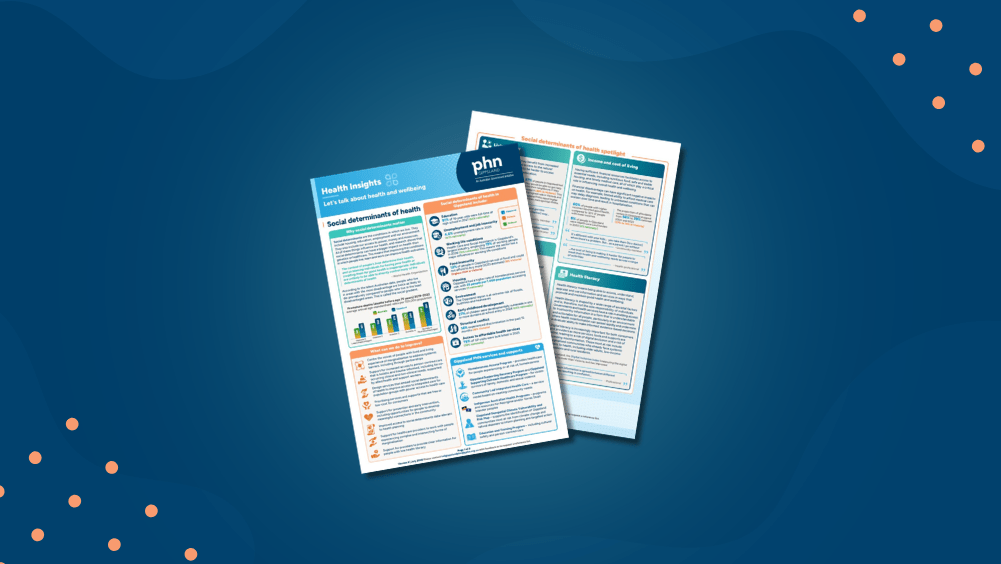
Gippsland PHN has released a new Health Insights paper, Health Insights: Social Determinants of Health, highlighting how the conditions people live, work, learn and connect in can have a major influence on health and wellbeing.
The paper explains that social determinants, such as housing, education, employment, income, food security, social inclusion, digital inclusion, the environment and rurality, can have a bigger impact on health than genetics or healthcare access alone.
It also highlights that improving health outcomes means looking beyond individual choices and focusing on the conditions that make good health possible.
In Gippsland, social determinants are shaped by a mix of strengths and challenges. Rurality can support strong community connection, with 57% of people in Gippsland reporting they could get help from neighbours if needed, compared to 49% in Victoria.
At the same time, 40% of people in Gippsland live in towns and settlements of fewer than 1,000 people, which can make it harder to access services, education and support.
Key insights include:
- People living in areas with the most disadvantage are twice as likely to die prematurely as people living in the least disadvantaged areas
- 22% of people in Gippsland experienced loneliness (compared to 23% in Victoria)
- 57% of people in Gippsland reported they could get help from neighbours if needed, compared to 49% in Victoria
- 12% of people in Gippsland ran out of food and could not afford to buy more in 2023, compared to 8% in Victoria
- 25 people per 1,000 population in Gippsland accessed homelessness services, compared to 11 nationally
- Affordable rentals in Gippsland dropped from 94% to 39% between 2000 and 2025
The paper also highlights access and affordability pressures, including food insecurity, housing affordability, health literacy and digital inclusion. These factors can influence people’s ability to live well and access care when they need it.
Gippsland PHN Chief Executive Officer Amanda Proposch said improving health means looking beyond individual choices.
“The conditions people live in have a major influence on their health and wellbeing,” Ms Proposch said.
“That includes whether people can access safe and stable housing, nutritious food, education, transport, social connection, digital tools and affordable healthcare.
“Gippsland has strong local communities and high levels of neighbour support, but many people also experience barriers that make it harder to stay well or access care when they need it.
“Improving health outcomes means working with communities and partners to improve the conditions that make good health possible.”
Read Health Insights: Social Determinants of Health here.
Stay connected to the latest primary health news
Gippsland PHN produces a range of informative newsletters designed to keep you in the loop with industry news, important updates, insights, training and events opportunities, and much more.
Subscribe or update your preferences below.